
Allègre Hadida
Associate Professor in Strategy
Fellow and Director of Studies at Magdalene College
European Master in Management & Diplôme Grande Ecole (ESCP Europe), DEA (Université Paris X Nanterre), MA (University of Cambridge), PhD (HEC Paris)
I’m a member of the Strategy and International Business subject group at Cambridge Judge Business School, and my research focuses on strategy and decision-making in volatile environments, with a particular interest in creative, arts and media sectors and organisations, on creativity and improvisation in business, and on temporary organisations. I’m a Fellow of the of the Royal Society of Arts, and also a member of the Centre for Film and Screen and the Centre for Heritage Research, University of Cambridge.

Professional experience
Allègre is a fellow of the Royal Society of Arts, a member of the Cambridge Film & Screen and a partner of the Cambridge Heritage Research Centre, University of Cambridge.
She is a joint lead of SMS-IACMENA (Strategic Management Society – International Academic Cooperation in the Middle East and Africa) and a former Representative-at-Large of the SMS Teaching Community (2015-2017).
Allègre sits on the Orientation Committee for the MS/MSc ‘Management des Arts et de la Création’ (MAC) at HEC Paris and served as the external examiner for the Arts, Business & Creativity MA at Newcastle University (2017-2022).
She is a member of the Scientific Committee at AIMAC (International Association for Arts and Cultural Management), where she was the first Strategy Track chair (2011-2022), organised the first live online Doctoral Seminar in 2020, and currently leads the Doctoral Symposium.
Publications
- Selected publications
- Journal articles
- Books, monographs, reports and case studies
- Book chapters
- Conference papers
- Working papers
Selected publications
- Hadida, A.L., Lampel, J., Walls, W.D. and Joshi, A. (2021) “Hollywood studio filmmaking in the age of Netflix: a tale of two institutional logics.” Journal of Cultural Economics, 45(2): 213-238 (DOI: 10.1007/s10824-020-09379-z)
- Hadida, A.L., Heide, J.B. and Bell, S. (2019) “The temporary marketing organization.” Journal of Marketing, 83(2): 1-18 (DOI: 10.1177/0022242918813119)
More about this publication:- Lead article in the March 2019 issue
- Featured as: “Effectively use temporary marketing organisations”, in Marketing News, May: 12-14
- Finalist for the 2019 Shelby D. Hunt/Harold H. Maynard Award, which recognises the article published in the Journal of Marketing that makes the most significant contributions to marketing theory in a given year
- Carrillat, F.A., Legoux, R. and Hadida, A.L. (2018) “Debates and assumptions about motion picture performance: a meta-analysis.” Journal of the Academy of Marketing Sciences, 46(2): 273-299 (DOI: 10.1007/s11747-017-0561-6)
- Seifert, M., Siemsen, E., Hadida, A.L. and Eisingerich, A.B. (2015) “Effective judgmental forecasting in the context of fashion products.” Journal of Operations Management, 36: 33-45 (DOI: 10.1016/j.jom.2015.02.001)
- Hadida, A.L., Tarvainen, W. and Rose, J. (2015) “Organizational improvisation: a consolidating review and framework.” International Journal of Management Reviews, 17(10): 437-459 (DOI: 10.1111/ijmr.12047)
- Reprinted in July 2020, International Journal of Management Reviews 1st Virtual Special Issue: “The COVID-19 pandemic: what can we learn from past research in organizations and management?”
- Seifert, M. and Hadida, A.L. (2013) “On the relative importance of linear model and human judge(s) in combined forecasting.” Organizational Behavior and Human Decision Processes, 120(1): 24-36
Journal articles
- Yazgulieva, S., Lyubareva, I., Hadida, A.L. and van Laer, T. (2026) “Degrees of persuasion: ethical communication in climate fiction films.” Journal of Business Ethics (forthcoming)
- Cubillos-Pinilla, L., Hadida, A.L., Baez, S., Hernandez, H. and Kizilyamac, M. (2025) “Neural foundations of creativity: a voxel-based meta-analysis of the activations and deactivations underlying creativity across linguistic, musical, and visual domains.” Neuroscience and Biobehavioral Reviews, 178: 106354 (DOI: 10.1016/j.neubiorev.2025.106354)
- Hadida, A.L., Lampel, J., Walls, W.D. and Joshi, A. (2021) “Hollywood studio filmmaking in the age of Netflix: a tale of two institutional logics.” Journal of Cultural Economics, 45(2): 213-238 (DOI: 10.1007/s10824-020-09379-z)
- Hadida, A.L., Heide, J.B. and Bell, S. (2019) “The temporary marketing organization.” Journal of Marketing, 83(2): 1-18 (DOI: 10.1177/0022242918813119)
- Carrillat, F.A., Legoux, R. and Hadida, A.L. (2018) “Debates and assumptions about motion picture performance: a meta-analysis.” Journal of the Academy of Marketing Sciences, 46(2): 273-299 (DOI: 10.1007/s11747-017-0561-6)
- Durand, R. and Hadida, A.L. (2016) “Logic combination and performance across occupational communities: the case of French film directors.” Journal of Business Research, 69(7): 2371-2379 (DOI: 10.1016/j.jbusres.2015.10.006)
- Hadida, A.L., Tarvainen, W. and Rose, J. (2015) “Organizational improvisation: a consolidating review and framework.” International Journal of Management Reviews, 17(4): 437-459 (DOI: 10.1111/ijmr.12047)
- Seifert, M., Siemsen, E., Hadida, A.L. and Eisingerich, A.B. (2015) “Effective judgmental forecasting in the context of fashion products.” Journal of Operations Management, 36: 33-45 (DOI: 10.1016/j.jom.2015.02.001)
- Seifert, M., Siemsen, E., Hadida, A.L. and Eisingerich, A.B. (2015) “When to forget the rearview mirror.” Harvard Business Review, 93(6): 30 (co-authored with HBR editor Matt Chase)
- Hadida, A.L. and Paris, T. (2014) “Managerial cognition and the value chain in the digital music industry.”Technological Forecasting and Social Change, 83: 84-97 (DOI: 10.1016/j.techfore.2013.04.005)
Books, monographs, reports and case studies
- Finney, A. and Hadida, A.L. (2019) The King’s Speech Distribution Gambit (Case B). Case Centre Ref: 319-0043-1B; 319-0043-8 (Teaching Note)
- Finney, A. and Hadida, A.L. (2019) The King’s Speech Producers’ Dilemma (Case A). Case Centre Ref: 319-0043-1; 319-0043-8 (Teaching Note)
- Hadida, A.L. and Astandu, T.V. (2013) “Big data and Channel 4 (Case B).” The Case Centre: 305-295-1 (case); 305-294-8 (teaching note case A & B).
- Hadida, A.L. and Morris, C.E. (2013) “Channel 4 and the British television industry: 1982-2013 (Case A).” The Case Centre: 305-294-1 (case A); 305-294-8 (teaching note case A & B) .
- Petrie, M., Schutt, B., Hadida, A.L., Barakat, S. and Cruz, A.B. (2012) A smooth sea never made a skilled sailor: DERO project: research findings and insights final report. London: National Endowment for Science, Technology and the Arts (NESTA).
- Hadida, A.L. (2007) “The Rashomon case study: David Puttnam versus Columbia Pictures.” The Case Centre: 303-259-1 (case); 303-259-8 (teaching note).
Book chapters
- Hadida, A.L. and Odiase, N.O. (2023) “Agility and improvisation.” In Pina e Cunha, M., Vera, D., Cunha Meneses Abrantes, A. and Miner, A. (eds.) Routledge companion to improvisation in organizations. London: Routledge
- Seifert, M., Siemsen, E., Hadida, A.L. and Eisingerich, A.E. (2023) “Effective judgmental forecasting in the context of fashion products.” In: Seifert, M. (ed.) Judgment in predictive analytics. Cham, IL: Springer, pp.85-114
- Hadida, A. (2020) “Event cinema.” In: Towse, R. and Navarrete Hernandez, T. (eds.) Handbook of cultural economics. Cheltenham: Edward Elgar, 3rd edition, pp.254-261
- Hadida, A. (2017) “What do we (think we) know about film performance?” In: Funk, J. (ed.) BigData.BigMovie: how algorithms transform the film and TV industry: conference proceedings. Berlin and Potsdam: Erich Pommer Institut and Filmuniversität Babelsberg Konrad Wolf, pp.21
- Busson, A. and Hadida, A.L., with Frery, F. (2015) “Stratégie.” In: Évrard, Y. et al. (eds.) Management des industries culturelles et créatives. Paris: Vuibert, pp.7-77
- Hadida, A.L. (2015) “Performance in the creative industries.” In: Jones, C., Lorenzen, M. and Sapsed, J. (eds.) The Oxford handbook of creative industries. Oxford: Oxford University Press, pp.219-247
- Hadida, A.L. (2013) “Strategic assets and performance across institutional environments.” In: Kaufman, J.C. and Simonton, D.K. (eds.) The social science of cinema. Oxford: Oxford University Press, pp.207-231
- Seifert, M. and Hadida, A.L. (2007) “Strategic decisions in high velocity contexts.” In Wankel, C. (ed.) The handbook of 21st century management. Thousand Oaks, CA: Sage Publications, pp.294-302
- Busson, A. and Hadida, A.L. (2004) “Stratégie et politique d’entreprise.” In Évrard, Y., Busson, A., Cauvin, C., Chiapello, È., Ferry-Maccario, N., Hadida A.L., Kéravel, A., and Silhol, O. (eds.) (eds.) Le management des entreprises artistiques et culturelles. Paris: Economica, 2nd edition, pp.14-61
Conference papers
- Seifert, M. and Hadida, A.L. (2009) “Decision making, expertise and task ambiguity: predicting success in the music industry.” In Solomon, G. (ed.) Best Paper Proceedings of the 2009 Academy of Management Meeting, 7-11 August, Chicago, IL. Briarcliff Manor, NY: Academy of Management.
- Hadida, A.L. (2005) “The impact of perfectly mobile resources on project performance: evidence from the U.S. cinema industry.” In: International Conference on Arts and Cultural Management, 8th, 3-6 July 2005, Montreal, Canada.
- Hadida, A.L. (2004) “Reputation resources, commitment and performance of cultural projects: an application to U.S. cinema.” In Academy of Management (eds.): Creating actionable knowledge: Academy of Management Annual Meeting, 64th, BPS Division, 6-11 August 2004, New Orleans, LA.
- Hadida, A.L. (2002) “Perspective de la ressource et avantage concurrentiel: un état de l’art des recherches empiriques (1985-2001).” In Association Internationale de Management Stratégique (eds.) Proceedings of the Annual International Conference of the Association Internationale de Management Stratégique (11th), 5-7 June 2002, Paris, France.
Working papers
- Ghertman, M. and Hadida, A.L. (1999) “Institutions, institutional change, strategic assets and competitive advantage of American and French film industries (1895-1998).” Les Cahiers de Recherche, No.669. Paris: HEC Paris
Awards and honours
- Mallen Award for Published Scholarly Contributions to Motion Picture Industry Studies, 2022
- Cambridge Judge Business School Excellence in Teaching Award, 2011, 2013, 2022
- Finalist, Shelby D. Hunt/Harold H. Maynard Award recognising the article published in the Journal of Marketing that makes the most significant contributions to marketing theory in a given year, (with J. Heide and S. Bell), 2020
- University of Cambridge Pilkington Prize for Excellence in Teaching, 2018
- 2nd Best Corporate Strategy MBA Course in the World, Financial Times, 2017
- MBA Teaching Award, as voted for by the Cambridge MBA class, 2005, 2008, 2010 and 2013
- Best Paper Prize, AIMAC Conference, Antwerp (with R. Legoux and F. Carrillat), 2011
- Best Paper Proceedings, Academy of Management, (with M. Seifert), 2009
- Nominated for a National Teaching Fellowship Award, 2006
- Special Jury Prize and Honorary Distinction, FNEGE Transdisciplinary Doctoral Dissertation Award, 2004
- Second Prize, AIMS-FNEGE Doctoral Dissertation in Strategy Award, 2004
- Finalist, Fondation HEC PhD Thesis Award, 2004
Videos
Media coverage
Variety | 9 June 2022
How to survive a bear market – Hollywood girds for a content correction (Special Report)
A sharp economic downturn in the US could force Disney, Warner Bros. Discovery and others to make hard choices for betting on growth in overmarkets or shoring up their English-language programming options, says a special report by Variety, titled “How to survive a bear market.” Allègre Hadida, Associate Professor of Strategy at Cambridge Judge Business School, comments in the report.
Forbes | 8 February 2022
Is work from anywhere here to stay?
Dr Allègre Hadida, Associate Professor of Strategy at Cambridge Judge Business School, comments on Adi Gaskell’s article on working from home for prolonged periods of time.
FDI Intelligence | 10 December 2021
How streaming platforms are changing the geography of media investment
An article discussing how economic developers worldwide are capitalising on the “streaming wars” to promote investment, high-value-added job creation and cultural exports. Allègre Hadida, Associate Professor of Strategy at Cambridge Judge Business School, who has researched the impact of streaming services on Hollywood studio filmmaking, comments in the article.
.wp-block-group.yellow-white-group{top:0px!important;}.nomargin a{text-decoration:none;}.nomargin a:hover{text-decoration:underline;}.nomargin, .has-small-font-size{margin-top:0px;margin-bottom:0px;}li{margin-bottom:20px;}
Karla Sayegh
Assistant Professor in Organisational Theory and Information Systems
BS (The Wharton School, University of Pennsylvania), BA (College of Arts and Sciences, University of Pennsylvania), MBA (Yale University), PhD (McGill University)
My research examines how organisational restructurings, emerging technologies and new buildings are reshaping knowledge work and collaboration, particularly in healthcare organisations. In these settings, I focus on the integration of knowledge and the coordination of expert work under conditions of uncertainty and rapid change.
The papers emerging from this research have received multiple recognitions including the sole finalist for the William H Newman Award, best division paper, best dissertation paper, best paper proceedings and best theory-to-practice paper at the Academy of Management. My co-authored publication in Information and Organization entitled “Working and organizing in the age of the learning algorithm” is among the journal’s most highly cited.

Professional experience
Karla Sayegh is an Assistant Professor of Organisational Theory and Information Systems at Cambridge Judge Business School. Prior to her academic career, she spent over 12 years in strategy consulting, real estate private equity, venture funding and executive university administration.
Karla’s research examines how experts change their ways of working in response to disruptive innovations, with an interest in healthcare organisations. In particular, she investigates how emerging technologies, novel spaces and new tools transform how experts collaborate with one another to perform their work. She is a member of the Organisational Theory & Information Systems subject group at Cambridge Judge Business School, which is engaged with cross-disciplinary themes including leadership, collaboration, social innovation and the future of work.
Karla holds a BS in Economics, summa cum laude, from the Wharton School, a BA in Asian and Middle Eastern Studies, summa cum laude, from the University of Pennsylvania, an MBA with distinction from Yale University and a PhD in Strategy and Organization from McGill University.
Selected publications
- Faraj, S. and Sayegh, K. (2026) “Spacing bodies: the interplay between focal and subsidiary coordinating.” Academy of Management Journal (DOI: 10.5465/amj.2024.0300) (published online Mar 2026)
- Sayegh, K., Langley, A. and Faraj, S. (2026) “Unsettling settled knowing: reconciling differences in expert practice.” Organization Science (DOI: 10.1287/orsc.2021.15859) (published online Sep 2025)
- Faraj, S., Pachidi, S. and Sayegh, K. (2018) “Working and organizing in the age of the learning algorithm.” Information and Organization, 28(1): 62-70 (DOI: 10.1016/j.infoandorg.2018.02.005)
- Faraj, S., Sayegh, K., and Rouleau, L. (2018) “Knowledge collaboration in organizations: from information processing to social knowing.” In: Galliers, R.D. and Stein, M.K. (eds.) The Routledge companion to management information systems. London: Taylor and Francis, pp.370-386.
Awards and honours
- Best Paper Award, Healthcare Division, Administrative Sciences Association of Canada, 2024
- Sole Finalist, William H Newman Award, AOM Annual Meeting, 2022
- Best Paper Award, HCM Division, AOM Annual Meeting, 2022
- Best Dissertation Award, HCM Division, AOM Annual Meeting, 2022
- Best Theory to Practice Paper Award, HCM Division, AOM Annual Meeting, 2018
- Best Student Paper Award, Organizational Behaviour in Healthcare Conference, 2018
- Best Conference Reviewer Award, OCIS Division, Academy of Management, 2016
- Outstanding Reviewer Award, SAP Interest Group, Academy of Management, 2015
- Paper of Merit Award, IS Division, Administrative Sciences Association of Canada, 2015
- Best Student Paper Award, IS Division, Administrative Sciences Association of Canada, 2014
.wp-block-group.yellow-white-group{top:0px!important;}.removetopmargin{margin-top:0px;}.nomargin a{text-decoration:none;}.nomargin a:hover{text-decoration:underline;}.nomargin, .has-small-font-size{margin-top:0px;margin-bottom:0px;}li{margin-bottom:20px;}
Simon Taylor
Management Practice Professor of Finance
Fellow of St Catharine’s College
MA (University of Cambridge), MPhil (University of Oxford), PhD (University of London)
My research interests include economics and financing of energy infrastructure, especially nuclear power. I was previously Deputy Head of European Equity Research at JPMorgan where I had responsibility for the technical and quantitative research teams and the technology, media, and telecoms sectors. I’m also a Fellow in Management at St Catharine’s College, where I am a member of the investment committee.
I’m part of the Finance subject group at Cambridge Judge Business School, and the Cambridge Energy Policy Research Group.

Professional experience
Simon spent 9 years as an equity analyst at a number of investment banks, including BZW, JPMorgan and Citigroup, where he was involved in several major equity transactions and takeovers and led research teams covering the European and global utilities sectors. In 2001 he became Deputy Head of European Equity Research at JPMorgan where he had management responsibility for the technical and quantitative research teams and for the technology, media and telecoms sectors. He was a leading member of the team that set up JPMorgan’s global research centre in Mumbai, India in 2003. He has been a consultant to a number of hedge funds and the London Stock Exchange and has regularly taught on the JPMorgan European equities training programme.
Previous appointments
Simon was the first Director of the Business School’s Master of Finance programme (from 2006 to 2018), and was Deputy Director of Executive Education at Cambridge Judge (from October 2014 till September 2016).
From 2016 to 2018, Simon was a Visiting Professor at the China Centre for Energy Economics at Xiamen University in China. He was an Honorary Visiting Fellow of Cranfield School of Management in 2005 and 2006. He was previously a joint college lecturer in economic theory at St Catharine’s and Girton Colleges, University of Cambridge. He has been an economics tutor at Exeter College, Oxford University, and has taught development finance at the National University of Lesotho. In February 2007 he was Scholar in Residence at the Sigmund Weiss School of Business at Susquehanna University, Pennsylvania.
Publications
- Selected publications
- Journal articles
- Books, monographs, reports and case studies
- Book chapters
- Working papers
Selected publications
- Taylor, S. (2016) The fall and rise of nuclear power in Britain: a history. Cambridge: UIT Cambridge.
- Taylor, S. (2010) “Nuclear power and deregulated electricity markets: lessons from British Energy.” In: Leveque, F., Glachant, J.-M., Barquin, J., von Hirschhausen, C., Holz, F. and Nuttall, W.J. (eds.) Security of energy supply in Europe: natural gas, nuclear and hydrogen. Cheltenham: Edward Elgar, pp.155-166.
- Nuttall, W.J. and Taylor, S. (2009) “Financing the nuclear renaissance.” European Review of Energy Markets, 3(2): 187-202
- Taylor, S. (2009) “The changing role and regulation of equity research.” In: Gardner, C. (ed.) Qfinance: the ultimate resource. London: Bloomsbury, pp.301-302.
- Taylor, S. (2008) “How should investors value nuclear liabilities?” Cambridge Judge Business School Working Papers, No.04/2008. Cambridge: University of Cambridge.
- Taylor, S. (2007) Privatization and financial collapse in the nuclear industry – the origins and causes of the British Energy crisis of 2002. London: Routledge.
Journal articles
- Nuttall, W.J. and Taylor, S. (2009) “Financing the nuclear renaissance.” European Review of Energy Markets, 3(2): 187-202
Books, monographs, reports and case studies
- Taylor, S. (2016) The fall and rise of nuclear power in Britain: a history. Cambridge: UIT Cambridge.
- Taylor, S. (2007) Privatization and financial collapse in the nuclear industry – the origins and causes of the British Energy crisis of 2002. London: Routledge.
Book chapters
- Taylor, S. (2023) “Can nuclear attract green finance?” In: Lehner, O.M., Harrer, T., Silvola, H. and Weber, O. (eds.) The Routledge handbook of green finance. London: Routledge, pp.374-390
- Taylor, S. (2020) “How will the Belt and Road Initiative be financed?” In: De Cremer, D., McKern, B. and McGuire, J. (eds.) The Belt and Road Initiative: opportunities and challenges of a Chinese economic ambition. London: Sage, pp.319-343
- Taylor, S. (2010) “Nuclear power and deregulated electricity markets: lessons from British Energy.” In: Leveque, F., Glachant, J.-M., Barquin, J., von Hirschhausen, C., Holz, F. and Nuttall, W.J. (eds.) Security of energy supply in Europe: natural gas, nuclear and hydrogen. Cheltenham: Edward Elgar, pp.155-166
- Taylor, S. (2009) “The changing role and regulation of equity research.” In: Gardner, C. (ed.) Qfinance: the ultimate resource. London: Bloomsbury, pp.301-302
Working papers
- Nuttall, W.J. and Taylor, S. (2008) “Financing the nuclear renaissance.” Electricity Policy Research Group Working Papers, No.EPRG 0814. Cambridge: University of Cambridge.
- Taylor, S. (2008) “How should investors value nuclear liabilities?” Cambridge Judge Business School Working Papers, No.04/2008. Cambridge: University of Cambridge.
- Taylor, S. (2008) “Nuclear power and deregulated electricity markets: lessons from British Energy.” Electricity Policy Research Group Working Papers, No.EPRG 0808. Cambridge: University of Cambridge.
Awards and honours
- Joint Winner, Sandra Dawson Research Impact Award (for his work on nuclear power), University of Cambridge, 2017
- Pilkington Prize for Excellence in Teaching, University of Cambridge, 2009
Media coverage
Renew Economy | 10 March 2021
Ten years on from Fukushima, nuclear power continues to struggle with deeper problems
Dr Simon Taylor, Faculty (Professor level) in Management Practice (Finance) at Cambridge Judge, comments on nuclear power in relation to the 10th anniversary of Fukushima nuclear disaster. “The history of nuclear power is something of a rollercoaster from inflated claims and optimism to disillusionment,” said Dr Taylor. “But the main reason is not a shift in public opinion following Fukushima, with attitudes remaining surprisingly favourable in the UK. The problem with new nuclear remains economic: it costs too much to build.”
Financial Times | 10 September 2020
Letters: Climate change risk will challenge even ESG funds
Dr Simon Taylor, Faculty (Professor level) in Management Practice (Finance) at Cambridge Judge Business School, writes in a letter to the Financial Times that climate change will challenge even investment funds focused on environmental, social and governance (ESG) issues.
The Spectator | 26 June 2020
Is nuclear power the answer to climate change?
Dr Simon Taylor Faculty (Professor level) in Management Practice (Finance) at Cambridge Judge Business School, was one of the panellists on a podcast discussing about nuclear power in the UK, the Hinkley Point power plant, energy policy and more.
.wp-block-group.yellow-white-group{top:0px!important;}.removetopmargin{margin-top:0px;}.nomargin a{text-decoration:none;}.nomargin a:hover{text-decoration:underline;}.nomargin, .has-small-font-size{margin-top:0px;margin-bottom:0px;}li{margin-bottom:20px;}
Thomas Roulet
Professor of Organisational Sociology and Leadership
Fellow and Director of Studies in Psychology & Behavioural Science at King’s College
MSc (Audencia), MPhil (SciencesPo Paris), MA (University of Cambridge), PhD (HEC Paris)
I am a social scientist researching and teaching how individuals and organisations can lead social change, and adapt to a changing workplace, especially around wellbeing. I also consult for and advise policy makers, public and private organisations on those issues. My work has appeared regularly in outlets such as the Academy of Management Journal, Review, Organization Science, Harvard Business Review and the MIT Sloan Management Review, and been featured in the Economist and the Financial Times.

Professional experience
Prior to starting an academic career, Thomas worked in Debt Capital Markets on a trading floor in London, and for the Center for Entrepreneurship at the Organization for Economic Cooperation & Development (OECD) in Paris.
His research focuses on negative social evaluations (stigma, disapproval) and their antecedents (misconducts, scandals), institutional and social change, and more recently on wellbeing and mental health in the context of work. He was made a Fellow of the Academy of Social Sciences in 2024 and a Mid-Career Fellow of the British Academy in 2023. His work has appeared in a variety of top scientific outlets in management, including the Academy of Management Journal, Academy of Management Review, Academy of Management Annals, Organization Science, Journal of Management Studies, Organization Studies, British Journal of Management), ethics (Business Ethics Quarterly, Journal of Business Ethics, Business & Society), and more broadly in social sciences and sociology (Human Relations, Work, Employment & Society, Journal of Vocational Behavior). He also published in practitioner outlets such as Harvard Business Review, and MIT Sloan Management Review, and has been regularly featured in media outlets such as the Financial Times, The Economist, The Washington Post, Bloomberg, The Telegraph, The Guardian, ITV, Die Zeit, Le Monde, France 24 and BBC Radio London, in addition to writing a column for Forbes.
His first book, ‘The Power of Being Divisive: Understanding Negative Social Evaluations’ (Stanford University Press, 2020), was the runner-up for the George Terry book award of the Academy of Management in 2021, an award recognising the book having made the most important contribution to the field of management. The Financial Times described the book as “a fascinating study of the social-media fuelled and fast-changing landscape of public opinion, and the possible ways in which that might be beneficial”.
His second book ‘Wellbeing Intelligence: Building Better Mental Health at Work’ (Profile Books / The Economist Edge Series, July 2025), co-authored with Dr Kiran Bhatti, provides concrete and practical skills to manage mental health in the workplace.
Since 2020, Thomas is a trustee of the Society for the Advancement of Management Studies (SAMS), a UK charity encouraging research in management and governing the Journal of Management Studies. He sits on the board of various journals including the Academy of Management Review, Organization Studies, Organization Science, the Journal of Management and the Journal of Management Studies. He is a Senior Editor at Organization Studies, and co-editor in charge of essays at the Journal of Management Studies. From 2017 to 2019 he acted as co-editor in chief of M@n@gement – the first open access journal in the field of management, supported by the French National Science Foundation and the French Academy of Strategic Management.
Thomas was named one of the Young Global Leaders by the World Economic Forum in 2024, and in 2025, he was appointed Co-Chair of the Global Future Council on Leadership, also with the World Economic Forum. His teaching received the 2023 Pilkington Prize, awarded to the best teachers at the University of Cambridge. He was also recognised by Poets & Quants (listed among the “40 under 40 best business school professors” in 2020) and Business Because (“Business school professors to look for in 2020”). He received the Cambridge Judge teaching award for his leadership teaching in the MBA in 2021. In parallel to his teaching in the Business School, he teaches social psychology and sociology in College, which earned him a honourable mention for the Supervisory Award attributed by the Cambridge Department of Sociology in 2020. In 2021, he co-founded the King’s Entrepreneurship Lab with Kamiar Mohaddes, an initiative aimed at elevating the entrepreneurial skills of Cambridge students beyond the Business School. Before joining Cambridge, he received a university-wide teaching award at King’s College London in 2018.
Thomas consults on a regular basis for a variety of clients around questions of workplace dynamics, uncertainty management, and wellbeing at work. In 2020-2021, he was involved in questions of organisational culture in a major M&A operation in France. He has also given talks and run seminars in ministries and in the public sectors on the return to work and the hybrid office.
Previous appointments
Before joining the University of Cambridge, Thomas was a Senior Lecturer and MSc Director at King’s College London. He has also taught at various levels from undergraduate to executives in a number of universities, including Oxford, SciencesPo, HEC Paris, Dauphine-PSL, and RMUTP in Bangkok.
In 2011-2012, he was a Chazen Visiting Scholar at Columbia University in the City of New York. Thomas also holds a faculty affiliation with the Society & Organizations (SnO) Research Centre at HEC Paris, where he got his PhD, and with Audencia Nantes.
Publications
Selected publications
- Lander, M.W., Roulet, T.J. and Heugens, P.P.M.A.R. (2023) “Tempering temperance? A contingency approach to social movements’ entry deterrence in Scottish whisky distilling, 1823-1921.” Academy of Management Journal, 66(5): 1384-1410 (DOI: 10.5465/amj.2019.1411)
- Roulet, T.J. and Bothello, J. (2023) “An event-system perspective on disruption: theorizing the pandemic and other discontinuities through historical and fictional accounts of the Plague.” Academy of Management Review, 48(4): 772-789 (DOI: 10.5465/amr.2021.0206)
- Shymko, Y., Roulet, T.J. and Pimentel, B.M. (2022) “The façade, the face, and the sympathies: opening the black box of symbolic capital as a source of philanthropic attractiveness.” Organization Science, 34(2): 870-893 (DOI: 10.1287/orsc.2022.1603)
- Rodner, V., Roulet, T.J., Kerrigan, F. and Vom Lehn, D. (2020) “Making space for art: a spatial perspective of disruptive and defensive institutional work in Venezuela’s art world.” Academy of Management Journal, 63(4): 1054-1081 (DOI: 10.5465/amj.2016.1030)
- Shymko, Y. and Roulet, T. (2017) “When does Medici hurt Da Vinci? Mitigating the signaling effect of extraneous stakeholder relationships in the field of cultural production.” Academy of Management Journal, 60(4): 1307-1338 (DOI: 10.5465/amj.2015.0464)
- Clemente, M. and Roulet T.J. (2015) “Public opinion as a source of deinstitutionalization: a ‘spiral of silence’ approach.” Academy of Management Review, 40(1): 96-114 (DOI: 10.5465/amr.2013.0279)
Journal articles
- Alessandra, P., Roulet, T.J. and Chiambaretto, P. (2026) “Working behind the scenes with the enemy: the tensions in collaboration between contested firms and NGOs to produce ethically substantive CSR communication.” Journal of Business Ethics (DOI: 10.1007/s10551-026-06387-5) (published online June 2026)
- Cristofini, O. and Roulet, T. (2026) “Playing with trash: how gamification fostered the early adoption of zero-waste practices.” Human Relations (DOI: 10.1177/00187267261431565) (published online Mar 2026)
- Garnier, C., Stenger, S. and Roulet, T. (2026) “Lost in evaluation: the intricacies of first- and second-order evaluation in auditors’ promotion committees in the Big Four audit firms.” Contemporary Accounting Research (DOI: 10.1111/1911-3846.70022) (published online Nov 2025)
- Haugh, H., Alexandrov, T. and Roulet, T. (2026) “Custodians at the crossroads: managing change at institutionally significant places.” Journal of Management (DOI: 10.1177/01492063251390855) (published online Jan 2026)
- Lodge, J., Helms, W.S., Roulet, T. and Tracey, P. (2026) “Organizations as stages: a dramaturgical theory of the societal integration of stigmatized groups.” Journal of Management (DOI: 10.1177/01492063261421506) (published online Feb 2026)
- Mor, S., Godart, F., Roulet, T. and Shemla, M. (2026) “The stereotype-as-heuristic paradox: when and how cultural metacognitive processes facilitate intercultural competence.” Human Resource Management Review, 36(4): 101167 (DOI: 10.1016/j.hrmr.2026.101167)
- Arora, N.K., Harvey, W.S. and Roulet, T.J. (2025) “Will I have to be reborn? Collective sensemaking of stigma among white-collar inmates.” Work, Employment and Society, 39(3): 551-573 (DOI: 10.1177/09500170241268391)
- Roulet, T., Wright, A., Fainschmidt, S. and Reay, T. (2025) “Essays in management and organization studies: past, present and future of a generative genre.” Journal of Management Studies, 62(1): 518-525 (DOI: 10.1111/joms.13149)
- Bapuji, H., Gupta, K., Chrispal, S. and Roulet, T. (2024) “What managers everywhere must know about caste.” MIT Sloan Management Review, 65(2): 60-65
- Carton, G., Parigot, J. and Roulet, T. (2024) “How not to turn the Grand Challenges literature into a Tower of Babel?” Business and Society, 63(2): 409-414 (DOI: 10.1177/00076503231159385)
Books, monographs, reports and case studies
- Bhatti, K. and Roulet, T. (2025) Wellbeing intelligence: building better mental health at work. London: Profile Books.
- Roulet, T.J. (2020) The power of being divisive: understanding negative social evaluations. Stanford, CA: Stanford University Press.
Book chapters
- Gourani, S. and Roulet, T. (2024) “Five ways to develop your Meeting Intelligence (MQ).” In: Dearlove, D. (ed.) Connectedness: how the best leaders create authentic human connection in a disconnected world. New York: Wiley, pp.137-146
- Roulet, T.J., Paolella, L., Gabbionneta, C. and Muzio, D. (2019) “Micro-foundations of institutional change in the career structure of UK elite law firms.” In: Haack, P., Sieweke, J. and Wessel, L. (eds.) Research in the sociology of organizations: vol.65(A): microfoundations of institutions. Bingley: Emerald Publishing, pp.251-268 (available online)
Awards and honours
- ABDC Network Award, Australian Business Deans Council Award for Innovation and Excellence in Research, 2024
- Gold Medal, Learning Technologies Award for our online course on Communication Skills with Cambridge Advance Online, 2024
- Named as a Young Global Leader, World Economic Forum, 2024
- Fellow, Academy of Social Sciences, 2024
- Mid-Career Fellow, British Academy, 2023
- Pilkington Prize for Excellence in Teaching, University of Cambridge, 2023
- Runner-up, George R Terry Book Award, Academy of Management, 2021
- Cambridge Judge Business School Teaching Award, 2021
- Listed among the “40 under 40 Business School Professors”, Poets & Quants, 2020
- Listed among the “Business School Professors to Look for”, Business Because, 2020
- Honorable Mention, Supervisor Award, Department of Sociology, University of Cambridge, 2020.
- Runner-up, Best Paper on Environmental and Social Practices, Organization & Management Theory Division, Academy of Management, 2020
- Runner-up, Responsible Research Award, Organization & Management Theory Division, Academy of Management, 2020
- Shortlisted, Bracken Bower Prize for the Best Business Book Proposal by an Author under 35, Financial Times & McKinsey, 2019
- London50, Top 50 Professors in Management in the London area, 2019
- University-wide Teaching Excellence Award, King’s College London, 2018
- Best paper in Organizational Research Methods for 2017, Research Methods Division, Academy of Management, 2018
- ABCD Reviewer Award, OMT Division, Academy of Management, 2018
- British Academy/Leverhulme Grant, 2017
- Best paper nomination, Research Methods Division, Academy of Management, 2016
- Shortlisted, Bracken Bower Prize for the Best Business Book Proposal by an Author under 35, Financial Times & McKinsey, 2015
- Runner-up, Grigor McClelland Best Dissertation Award, EGOS, 2014
- Roland Calori Award (Best young scholar in strategy), AIMS (French Association for Management), 2014
Media coverage
Financial Times | 22 February 2023
Culture clash – the challenge of uniting fierce rivals UBS and Credit Suisse
Thomas Roulet, Associate Professor in Organisation Theory and Deputy Director of the MBA programme at Cambridge Judge Business School, comments about the integration of UBS and Credit Suisse.
INBusinessnews | 23 March 2017
The new era for entrepreneurship at the heart of the CIM Summit 2023
Thomas Roulet, Associate Professor in Organisation Theory and Deputy Director of the MBA programme at Cambridge Judge Business School, is mentioned in this article about mental health in the era of teleworking, digital marketing and artificial intelligence.
Newsweek | 6 February 2023
More than a third of Americans are ‘quiet quitting’
Thomas Roulet, Associate Professor in Organisation Theory and Deputy Director of the MBA programme at Cambridge Judge Business School, is mentioned in this article regarding Americans’ attitudes towards work after the challenges of the COVID-19 pandemic. “In a highly uncertain world, people are looking for purpose, not mind-numbing work where they feel like a cog in a large dehumanised machine,” says Thomas..
.wp-block-group.yellow-white-group{top:0px!important;}.removetopmargin{margin-top:0px;}.nomargin a{text-decoration:none;}.nomargin a:hover{text-decoration:underline;}.nomargin, .has-small-font-size{margin-top:0px;margin-bottom:0px;}li{margin-bottom:20px;}
Dame Sandra Dawson
KPMG Professor Emerita of Management Studies
Member of the Advisory Board, Cambridge Judge Business School
Fellow (Organisational Theory and Information Systems)
Fellow of Sidney Sussex College
BA (Keele University), MA (University of Cambridge), FIPH, FCGI, Hon DSc (Keele University), Hon DSc (University of London, Royal Holloway), CIM, DBE “in recognition of her contribution to higher education and management research”
My research interests are leadership, organisational change and governance.

Professional experience
Dame Sandra was Dean of Cambridge Judge Business School from 1995 to 2006, Master of Sidney Sussex College from 1999 to 2009 and one of the Deputy Vice Chancellors of the University from 2008 to 2012. She writes and consults on organisational behaviour, leadership and governance. She was invested as a Dame Commander of the British Empire as part of the UK national honours system in recognition of her contribution to higher education and management research and in 2006 she was inducted into the International Women’s Forum’s International Hall of Fame in recognition of her achievements in business education and leadership development including being an outstanding role model for women who aspire to lead in the commercial, educational and not-for-profit sectors.
Dame Sandra has wide experience in the commercial, public and charitable sectors, through research, consultancy, executive development and Board membership. Former positions include Chair of Riverside Mental Health NHS Trust and the executive committee of the Social Science Research Council in the USA, Vice Chair of Oxfam, a Non-Executive Director of TSB Bank, Barclays, JPMorgan Claverhouse Investment Trust and the Financial Services Authority, and a member of the Prime Minister’s Council on Science and Technology, the Windrush Lessons Learned Review Advisory Group, UK’s Senior Salaries Review Body, an Advisory Board for the Aga Khan University on building a business school to meet the needs of emerging economies, the Board of the American University of Sharjah and an expert witness on governance, leadership and management to the Post Office Horizon Inquiry. She currently Chairs the Advisory Board of the Cambridge Museum of Zoology and sits on the Advisory Board of Cambridge Judge Business School.
.wp-block-group.yellow-white-group{top:0px!important;}.nomargin a{text-decoration:none;}.nomargin a:hover{text-decoration:underline;}.nomargin, .has-small-font-size{margin-top:0px;margin-bottom:0px;}li{margin-bottom:20px;}
Jennifer Howard-Grenville
Diageo Professor in Organisation Studies
BSc (Queen’s University), MA (University of Oxford), PhD (Massachusetts Institute of Technology)
My research interests include business transformation for sustainability, organisational change, organisational culture, identity and routines, and future of work. I’ve conducted in-depth qualitative studies in a variety of sectors, including manufacturing, apparel, and energy, have published more than 40 academic journal articles and several books, and am active in advisory work.
I’m Head of the Organisational Theory and Information Systems subject group at Cambridge Judge Business School, which is engaged with cross-disciplinary themes including leadership.

Professional experience
Professor Howard-Grenville’s research is focused on how people and organisations generate and navigate change. She has conducted in-depth qualitative studies in a variety of sectors, including manufacturing, apparel and energy.
Professor Howard-Grenville has published more than 40 academic journal articles, several books, and contributes to publications like Harvard Business Review and the Financial Times. She teaches on change management and sustainability topics at all levels (undergraduate through PhD), including executive education, and is active in advisory work.
She has served as both Deputy Editor and Associate Editor at one of the management field’s flagship academic journals, Academy of Management Journal, and is a Fellow of the Academy of Social Sciences, and a Fellow of Trinity Hall, Cambridge. She received her PhD at MIT, her MA at Oxford, and her BSc (Eng) at Queen’s University, Canada.
Previous appointments
Jennifer Howard-Grenville was previously Associate Professor of Management at the University of Oregon’s Lundquist College of Business.
Publications
Selected publications
- Galdon, C., Haanes, K., Halbheer, D., Howard-Grenville, J., Le Goulven, K., Rosenberg, M., Tufano, P. and Whitelaw, A. (2022) ”Business schools must do more to address the climate crisis.” Harvard Business Review, 1 February 2022
- Howard-Grenville, J., Nelson, A., Vough, H. and Zilber, T.B. (2021) “From the editors: achieving fit and avoiding misfit in qualitative research.” Academy of Management Journal, 64(5): 1313-1323 (DOI: 10.5465/amj.2021.4005)
- Empson, L. and Howard-Grenville, J. (2021) “How has the past year changed you and your organization?” Harvard Business Review, 10 March 2021
- Howard-Grenville, J. (2021) “ESG impact is hard to measure – but it’s not impossible.” Harvard Business Review, 22 January 2021
- Howard-Grenville, J., Lahneman, B. and Pek, S. (2020) “Organizational culture as a tool for change.” Stanford Social Innovation Review, 18(3): 28-33 (DOI: 10.48558/qt3w-na41)
- de Rond, M., Holeman, I. and Howard-Grenville, J. (2019) “Sensemaking from the body: an enactive ethnography of rowing the Amazon.” Academy of Management Journal, 62(6): 1961-1988 (DOI: 10.5465/amj.2017.1417)
For a complete list of Professor Howard-Grenville’s academic journal publications, please see Google Scholar, or her CV (on the right).
Visit her website for the most up-to-date information about her work.
Journal articles
- Lahneman, B., Walls, J.L., Unter, K.M.M. and Howard-Grenville, J. (2026) “Express: (Re)focusing on planetary boundaries for corporate sustainability research.” Strategic Organization (DOI: 10.1177/14761270251315632) (published online Jan 2025)
- Salenius, V., Cuthbertson, R. and Howard-Grenville, J. (2026) “Discontinuous but not disruptive: lessons from green steel on sustainability innovation pathways for foundation industries.” Research Policy, 55(8): 105541 (DOI: 10.1016/j.respol.2026.105541)
- Lahneman, B. and Howard-Grenville, J. (2025) “Systems approaches for corporate sustainability: how a certification program can develop and enact a bridging capacity.” Organization and Environment, 38(3): 347-377 (DOI: 10.1177/10860266251325268)
- Gapp, T. and Howard-Grenville, J. (2024) “Bringing organizational cultures together for social impact.” Stanford Social Innovation Review, 25 November 2024 (DOI: 10.48558/6a7b-2g56)
- Noonan, A., Howard-Grenville, J. and Khalifa, D. (2023) “Corporate activism when the stakes are high: how traditional organizations can navigate the space of corporate activism.” California Management Review, 17 April 2023
- Galdon, C., Haanes, K., Halbheer, D., Howard-Grenville, J., Le Goulven, K., Rosenberg, M., Tufano, P. and Whitelaw, A. (2022) ”Business schools must do more to address the climate crisis.” Harvard Business Review, 1 February 2022
- Howard-Grenville, J. and Spengler, J. (2022) “Surfing the grand challenges wave in management scholarship: how did we get here, where are we now, and what’s next?” Research in the Sociology of Organizations, 79: 279-295 (DOI: 10.1108/S0733-558X20220000079025)
- Empson, L. and Howard-Grenville, J. (2021) “How has the past year changed you and your organization?” Harvard Business Review, 10 March 2021
- Hahn, T., Howard-Grenville, J., Lyon, T., Russo, M.V. and Walls, J.L. (2021) “Leadership forum on organizations and sustainability: taking stock, looking forward.” Organization and Environment, 34(1): 3-17 (DOI: 10.1177/1086026621992147)
- Howard-Grenville, J. (2021) “Caring, courage and curiosity: reflections on our roles as scholars in organizing for a sustainable future.” Organization Theory, 2(1) (DOI: 10.1177/2631787721991143)
- Howard-Grenville, J. (2021) “ESG impact is hard to measure – but it’s not impossible.” Harvard Business Review, 22 January 2021
Books, monographs, reports and case studies
- Shuckburgh, E., Zenghelis, D., Agarwala, M., Diaz Anadon, L., Howard-Grenville, J., Penasco, C., Seega, N., Whittington, E., Barford, A., Brayne, C. et al (2020) A blueprint for a green future: multidisciplinary report on a green recovery from COVID-19 by the Cambridge Zero Policy Forum. Cambridge: Cambridge Open Engage.
- Howard-Grenville, J.A., Bertels, S. and Lahneman, B. (2017) Regulatory management and culture (commissioned by Best-in-Class Regulator Initiative/Alberta Energy Regulator). Philadelphia, PA: Penn Program on Regulation, University of Pennsylvania Law School.
- Howard-Grenville, J., Tsoukas, H. and Langly, A. (2016) Organizational routines: how they are created, maintained, and changed. Oxford: Oxford University Press.
- Boons, F. and Howard-Grenville, J.A. (ed.) (2009) The social embeddedness of industrial ecology. Cheltenham: Edward Elgar.
- Howard-Grenville, J.A. (2007) Corporate culture and environmental practice: making change at a high-technology manufacturer. Cheltenham: Edward Elgar.
- Graedel, T.E. and Howard-Grenville, J.A. (2005) Greening the industrial facility: perspectives, approaches, and tools. New York: Springer.
Book chapters
- Howard-Grenville, J. and Gapp, T. (2022) “Organizational culture for sustainability.” In: George, G., Haas, M.R., Joshi, H., McGahan, A.M. and Tracey, P. (eds.) Handbook on the business of sustainability: the organization, implementation, and practice of sustainable growth. Cheltenham: Edward Elgar, pp.138-151
- Howard-Grenville, J. (2020) “Individual agency and collective patterns of action.” In: Tuveson, M., Ralph, D. and Alexander, K. (eds.) Beyond bad apples: risk culture in business. Cambridge: Cambridge University Press, pp.21-41 (DOI: 10.1017/9781316996959.002)
- Claus, L., de Rond, M., Howard-Grenville, J. and Lodge, J. (2019) “When fieldwork hurts: on the lived experience of conducting research in unsettling contexts.” In: Zilber, T.B., Amis, J.M., Mair, J. (eds.) Research in the sociology of organizations: vol.59: the production of managerial knowledge and organizational theory: new approaches to writing, producing and consuming theory. Bingley: Emerald Group Publishing, pp.157-172
- Howard-Grenville, J. and Rerup, C. (2016) “A process perspective on organizational routines.” In: Langley, A. and Tsoukas, H. (eds.) The SAGE handbook of process organization studies. London: Sage, pp.323-339
- Howard-Grenville, J.A., Bertels, S. and Lahneman, B. (2014) “Sustainability: how it shapes and is shaped by organizational culture and climate.” In Schneider, B. and Barbera, K.N. (eds.) The Oxford handbook of organizational climate and culture. Oxford: Oxford University Press, pp.257-276
- Howard-Grenville, J.A. (2012) “Revealing themes: applying a positive lens to the chapters on environment and sustainability.” In Golden-Biddle, K. and Dutton, J. (eds.) Using a positive lens to explore social change and organizations: building a theoretical and research foundation. London: Routledge.
- Howard-Grenville, J.A. and Bertels, S. (2012) “Organizational culture and environmental action.” In Bansal, T. and Hoffman, A.J. (eds.) The Oxford handbook of business and the environment. Oxford: Oxford University Press, pp.194-210
- Howard-Grenville, J.A. and Paquin, R. (2008) “Organizational dynamics in industrial ecosystems: insights from organizational behavior theory.” In Ruth, M. and Davidsdottir, B. (eds.) Changing stocks, flows and behaviors in industrial ecosystems. Cheltenham: Edward Elgar, pp.122-139
- Paquin, R. and Howard-Grenville, J. (2008) “Facilitating regional industrial symbiosis: network growth in the UK’s National Industrial Symbiosis Programme.” In: Boons, F. and Howard-Grenville, J. (eds.) The social embeddedness of industrial ecology. Cheltenham: Edward Elgar, pp.103-127
- Howard-Grenville, J.A., Hoffman, A.J. and Bhattacharya, C.B. (2007) “Who can act on sustainability issues? Corporate capital and the configuration of organizational fields.” In Sharma, S., Starik, M. and Husted, B. (eds.) Organizations and the sustainability mosaic: crafting long-term ecological and societal solutions. Cheltenham: Edward Elgar, pp.193-215
- Howard-Grenville, J.A. (2002) “Institutional evolution: the case of the semiconductor industry voluntary PFC emissions reduction agreements.” In Hoffman, A. and Ventresca, M. (eds.) Organizations, policy, and the natural environment. Stanford, CA: Stanford University Press, pp.291-308
- Howard-Grenville, J.A. (1998) “Implementation of global environmental treaties: the role for coordinated corporate action.” In Moomaw, W., Susskind, L. and Hill, T. (eds.) Papers on international environmental negotiation: vol.VI. Cambridge, MA: Harvard Law School
- Ehrenfeld, J. and Howard-Grenville, J. (1996) “Setting environmental goals: the view from industry: a review of practices from the 1960s to the present.” In: National Forum on Science and Technology Goals (eds.) Linking science and technology to society’s environmental goals. Washington, DC: National Academies Press, pp.281-326
Awards and honours
- Elected Fellow of the Academy of Social Sciences, 2021
- Best Paper Published in 2019 Award (for “Sensemaking from the body: an enactive ethnography of rowing the Amazon” with Mark de Rond and Isaac Holeman), Academy of Management (OMT Division), 2020
- Best Paper Award (for “Role regeneration as a pathway to ‘powerless’ category persistence” with Matthew Lee Metzger), Academy of Management (OMT Division), 2018
- IACMR Presidential Award for Responsible Research in Management, 2017
- Best Paper Award, Sustainability, Ethics and Entrepreneurship (SEE) Conference, 2015
- Faculty Excellence Award (14 across the University), University of Oregon, 2013
- Thomas C Stewart Distinguished Professor, Lundquist College of Business, 2013
- James E Reinmuth MBA Teaching Excellence Award, 2012
- James E Reinmuth MBA Teaching Excellence Award, 2010
- Faculty Pioneer Award Finalist, Aspen Institute, 2008
Media coverage
Financial Times | 16 January 2023
Academic research award – tipping point for action
Jennifer Howard-Grenville, Diageo Professor in Organisation studies at Cambridge Judge Business School, speaks about Responsible Business Education award-winning paper.
“It was one of most exciting and impactful research papers I handled in six years at the Academy of Management Journal,” Jennifer said.
FT Specialist’s Agenda by the Financial Times | 27 March 2022
The future of hybrid working – directors must focus on culture
Jennifer Howard-Grenville, Diageo professor of organisation studies at Cambridge Judge Business School, comments on the future of hybrid working.
It is important for boards to remember that the world is still emerging from a transformational period, she says. Companies should be slow and mindful of the diverse experiences of their staff during the pandemic.
“Culture is about how a collective of individuals works towards common goals, despite having diverse experiences and expertise,” Jennifer says.
Poets & Quants | 21 March 2022
B-schools – leading or struggling on gender & race diversity?
New research from Cambridge Judge Business School looks at gender and racial diversity at 22 top US and UK business schools and finds that while B-schools are “strategically positioned to bring lasting change to the global corporate environment,” they still face considerable hurdles in trying to increase diversity.
“Top-ranking UK and US business schools have considerable international diversity, but this cannot be used as proxy for racial diversity,” reads the new report co-authored for the Cambridge Wo+Men’s Leadership Centre by Dr Bola Grace, an executive MBA graduate of Cambridge Judge, and Judge School faculty members Lionel Paolella and Jennifer Howard-Grenville.
.wp-block-group.yellow-white-group{top:0px!important;}.removetopmargin{margin-top:0px;}.nomargin a{text-decoration:none;}.nomargin a:hover{text-decoration:underline;}.nomargin, .has-small-font-size{margin-top:0px;margin-bottom:0px;}li{margin-bottom:20px;}
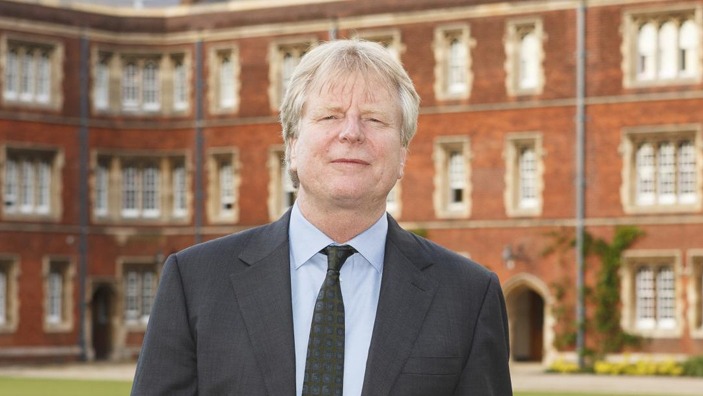
Jochen Runde
Professor of Economics and Organisation
Professorial Fellow of Girton College
BCom (Hons), MCom (University of the Witwatersrand), MPhil, PhD (University of Cambridge)
My research interests include decision-making under extreme uncertainty, social ontology and the ontology of technology, explanation in the social sciences, innovation and entrepreneurship, institutional economics, and the economics of the Austrian School. I’m co-editor of the Cambridge Journal of Economics and have previously been awarded the Pilkington Prize for Excellence in Teaching.
I’m a member of the Economics and Policy subject group at Cambridge Judge Business School, which analyses how economics can improve growth and business performance.
Professional experience
Jochen is co-editor of the Cambridge Journal of Economics and an associate of the Cambridge Social Ontology Group (CSOG). He has been Director of Faculty at Cambridge Judge Business School (2017-2020), Director of the MBA (2008-2013), Director of Programmes (2007-2008) and Head of the Economics & Policy subject group (2015-2017). He is a former Fellow of the Cambridge-MIT Institute (CMI), where he was Associate Director of the Professional Practice Programme (2001-2003) and Director of Graduate Programmes (2003-2005), and has served as Graduate Tutor at Girton College (1998-2005), Chair of the Chemical Engineering and Biotechnology Syndicate (2008-2016), and on the University of Cambridge Board of Graduate Studies (2003-2008) and Executive Committee of the Careers Syndicate (2008-2011).
Previous appointments
Jochen has taught at Cambridge Judge Business School since 1999, prior to which he was Fellow and Lecturer in Economics (1992-1999) and Doris Woodall Research Fellow (1991-1992) at Girton College, Cambridge. Before moving to Cambridge, he was Lecturer in Economics at the Department of Economics, University of the Witwatersrand, in Johannesburg (1984-1990).
Publications
- Selected publications
- Journal articles
- Special issues of journals
- Books, monographs, reports and case studies
- Book chapters
Selected publications
- Faulkner, P. and Runde, J. (2019) “Theorizing the digital object.” MIS Quarterly, 43(4): 1279-1302 (DOI: 10.25300/MISQ/2019/13136)
- Feduzi, A. and Runde, J. (2014) “Uncovering unknown unknowns: towards a Baconian approach to management decision-making.” Organizational Behavior and Human Decision Processes, 124(2): 268-283 (DOI: 10.1016/j.obhdp.2014.04.001)
- Ellsaesser, F., Tsang, E.W.K. and Runde, J. (2014) “Models of causal inference: imperfect but applicable is better than perfect but inapplicable.” Strategic Management Journal, 35(10): 1541-1551 (DOI: 10.1002/smj.2164)
- Faulkner, P. and Runde, J. (2013) “Technological objects, social positions and the transformational model of social activity.” MIS Quarterly, 37(3): 803-818
- Feduzi, A., Runde, J. and Zappia, C. (2012) “De Finetti on the insurance of risks and uncertainties.” British Journal for the Philosophy of Science, 63(2): 329-356 (DOI: :10.1093/bjps/axr028)
- Faulkner, P. and Runde, J. (2009) “On the identity of technological objects and user innovations in function.” Academy of Management Review, 34(3): 442-462
Journal articles
- Runde, J. (2026) “Shades of realism.” Review of Austrian Economics (DOI: 10.1007/s11138-025-00714-1) (published online Dec 2025)
- Lewis, P., Pratten, S. and Runde, J. (2025) “Ontological theorising and the history of economic thought: an introduction.” Cambridge Journal of Economics, 49(6): 1115-1122 (DOI: 10.1093/cje/beaf054)
- Lewis, P. and Runde, J. (2025) “Bloomington and Cambridge compared: varieties of ontological thinking, social positioning, and the self-governance of common-pool resources.” Cambridge Journal of Economics, 49(6): 1495-1516 (DOI: 10.1093/cje/beae018)
- Derbyshire, J., Feduzi, A. and Runde, J. (2023) “Borrowing from Keynes’ A treatise on probability: non-probabilistic measure of uncertainty for scenario planning.” European Management Review, 20(4): 638-650 (DOI: 10.1111/emre.12549)
- Feduzi, A., Faulkner, P., Runde, J., Cabantous, L. and Loch, C.H. (2022) “Heuristic methods for updating small world representations in strategic situations of Knightian uncertainty.” Academy of Management Review, 47(3): 402-424 (DOI: 10.5465/amr.2018.0235)
- Feduzi, A., Runde, J. and Schwarz, G. (2022) “Unknowns, Black Swans, and bounded rationality in public organizations.” Public Administration Review, 82(5): 958-963 (DOI: 10.1111/puar.13522)
- Heuer, T. and Runde, J. (2022) “The Elbphilharmonie and the Hamburg effect: on the social positioning, identities and system functions of a building and a city.” European Planning Studies, 30(1): 85-104 (DOI: 10.1080/09654313.2021.1908232)
- Cardinale, I. and Runde, J. (2021) “From dishwashing to dishwasher cooking: on social positioning and how users are drawn towards alternative uses of existing technology.” Cambridge Journal of Economics, 45(4): 613-630 (DOI: 10.1093/cje/beab026)
- Faulkner, P., Feduzi, A., McCann Jr, C.R. and Runde, J. (2021) “F.H. Knight’s Risk, uncertainty, and profit and J.M. Keynes’ Treatise on probability after 100 years.” Cambridge Journal of Economics, 45(5): 857-882 (DOI: 10.1093/cje/beab035)
- Runde, J., Feduzi, A. and Cabantous, L. (2021) “Commentary on Brian T. McCann’s ‘Bayesian updating’.” California Management Review, 25 April 2021
Special issues of journals
- Faulkner, P., Feduzi, A., McCann Jr, C.R. and Runde, J. (eds.) (2021) “Special issue on F.H. Knight’s Risk, uncertainty, and profit and J.M. Keynes’ Treatise on probability after 100 years.” Cambridge Journal of Economics, 45(5)
- Runde, J., Lewis, P. and Graça Moura, M. (eds.) (2020) “Special issue on ontology and the history of economic thought.” Cambridge Journal of Economics, 44(5)
- Fontana, G., Pitelis, C., and Runde, J. (eds.) (2019) “Special issue on financialisation and the new capitalism.” Cambridge Journal of Economics, 43(4)
- Faulkner, P., Pratten, S. and Runde, J. (eds.) (2017) “Special issue on Cambridge social ontology.” Cambridge Journal of Economics, 41(5)
- Pitelis, C. and Runde, J. (eds.) (2017) “Special issue on post-classical perspectives on the interaction between business organisation and public policy.” Cambridge Journal of Economics, 41(3)
- Faulkner, P., Lawson, C. and Runde, J. (eds.) (2010) “Special issue on the nature of technology.” Cambridge Journal of Economics, 34(1)
- Blankenburg, S., Lawson, C., Lawson, T., Lewis, P., Pratten, S. and Runde, J. (eds.) (2002) “Special issue on critical realism.” Cambridge Journal of Economics, 26(6)
- Runde, J. and Anand, P. (eds.) (1997) “Special issue on rationality and methodology.” Journal of Economic Methodology, 4(1)
- Runde, J. and Wilkinson, F. (eds.) (1993) “Special issue on German reunification.” Cambridge Journal of Economics, 17(3)
Books, monographs, reports and case studies
- Faulkner, P., Runde, J., Aidt, T. and Taylor, S. (2007) LiveEcon: microeconomics essentials. Fully electronic textbook. Aberdeen: Interactyx.
- Taylor, C., McCausland, D. and Runde, J. (2006) LiveEcon: macroeconomics intermediate. Fully electronic textbook. Aberdeen: Interactyx.
- Taylor, C., McCausland, D. and Runde, J. (2006) LiveEcon: macroeconomics principles. Fully electronic textbook. Aboyne: Interactyx.
- Davis, J.B., Marciano, A. and Runde, J. (eds.) (2004) The Elgar companion to economics and philosophy. Cheltenham: Edward Elgar.
- Runde, J. and Mizuhara, S. (eds.) (2003) The philosophy of Keynes’s economics: probability, uncertainty and convention. London: Routledge.
Book chapters
- Fransman, M., Garzarelli, G., Lewin, P., Runde, J. and Torr, C. (2019) “Reminiscences of Ludwig M. Lachmann.” In: Fiorito, L., Scheall, S. and Suprinyak, C.E. (eds.) Including a symposium on Ludwig Lachmann (Research in the History of Economic Thought and Methodology, vol.37B). Bingley: Emerald Publishing, pp.83-92
- Faulkner, P. and Runde, J. (2012) “On sociomateriality.” In Leonardi, P.M., Nardi, B. and Kallinikos, J. (eds.) Materiality and organizing: social interaction in a technological world. Oxford: Oxford University Press, pp.49-66 (DOI: 10.1093/acprof:oso/9780199664054.003.0003)
- Davis, J., Marciano, A. and Runde, J. (2004) “Introduction.” In Davis, J.B., Marciano, A. and Runde, J. (eds.): The Elgar companion to economics and philosophy. Cheltenham: Edward Elgar, pp.xii-xxvii
- Faulkner, P. and Runde, J. (2004) “Information, knowledge and modelling economic agency.” In Davis, J.B., Marciano, A. and Runde, J. (eds.): The Elgar companion to economics and philosophy. Cheltenham: Edward Elgar, pp.423-445
- Bibow, J., Lewis, P. and Runde, J. (2003) “On convention: Keynes, Lewis and French School.” In Runde, J. and Mizuhara, S. (eds.): The philosophy of Keynes’s economics: probability, uncertainty and convention. London: Routledge, pp.185-195
- Runde, J. (2003) “On some explicit links between Keynes’s A treatise on probability and The general theory.” In Runde, J. and Mizuhara, S. (eds.): The philosophy of Keynes’s economics: probability, uncertainty and convention. London: Routledge, pp.46-54
- Runde, J. and Mizuhara, S. (2003) “Introduction.” In Runde, J. and Mizuhara, S. (eds.): The philosophy of Keynes’s economics: probability, uncertainty and convention. London: Routledge, pp.1-16
- Lewis, P. and Runde, J. (2002) “Intersubjectivity in the socio-economic world: a critical realist perspective.” In Fullbrook, E. (ed.): Intersubjectivity in economics: agents and structures. London: Routledge, pp.198-215
- Runde, J. (2002) “Assessing creditworthiness and small-firm bank lending.” In Arestis, P., Desai, M. and Dow, S. (eds.): Methodology, microeconomics and Keynes: essays in honour of Victoria Chick: vol.2. London: Routledge, pp.203-214
- Runde, J. (2001) “Chances and choices: notes on probability and belief in economic theory.” In Maki, U. (ed.): The economic world view: studies in the ontology of economics. Cambridge: Cambridge University Press, pp.132-153
Awards and honours
- Pilkington Prize for Excellence in Teaching, University of Cambridge, 2017
- Best Article Award (for “De Finetti on uncertainty” by Feduzi, Runde and Zappia, Cambridge Journal of Economics), European Society for the History of Economic Thought (ESHET), 2016
Media coverage
The West Australian | 13 November 2015
Expecting the unexpected
Jochen Runde, Professor of Economics & Organisation at Cambridge Judge Business School, discusses the challenge of imagining possible futures in light of recent work on “unknown unknowns” and “black swans”. “The idea is that at least some unknown unknowns, some Black Swans, are not unknowns because there is something intrinsic about them. We suffer from all kinds of cognitive biases and subjective biases which means we don’t try hard enough to interpret the evidence before us,” he said.
The Daily Telegraph | 15 June 2013
Flexible study options are on the rise: part time MBAs
The rise of the part-time MBA is one of the most robust trends in business education…Now in its fifth year, the EMBA at Cambridge Judge Business School is an example of this. Jochen Runde, professor of economics and organisation at the school, believes that…”
HT Education | 19 September 2012
Moving beyond English
As new markets emerge, business schools are realising the need to turn out multilingual graduates… At Cambridge Judge Business School in the UK, one of the electives/projects in the MBA programme requires students to learn Mandarin. Dr Jochen Runde, Director of the Cambridge MBA says: “This is a beginner’s course that is offered at the end of the academic year…”
Vincent Mak
Professor of Marketing and Decision Sciences
BA, MMath, MSc (University of Cambridge), PhD (Hong Kong University of Science and Technology)
My research interests span managerial decision making, consumer behaviour and experimental economics. I’m interested in how individuals and firms make decisions as they interact with each other, and what economic and psychological factors influence those decisions. Specific topics I examine include prosocial behaviour, pricing, search behaviour and sustainability. My research has appeared in major journals such as Proceedings of the National Academy of Sciences, Psychological Science, Management Science, Organizational Behavior and Human Decision Processes, Journal of Marketing, Manufacturing & Service Operations Management, and Games and Economic Behavior.

Professional experience
Vincent is on the Editorial Review Board of the journal Production and Operations Management. He was also an Associate Editor of the journal Information Systems Research’s Special Issue on Analytical Creativity. He is a member of the Research Impact Fund Committee at the Research Grants Council of Hong Kong, and has been appointed a Guest Fellow at Lui Che Woo College, University of Macau. He was a member of the Senior Leadership Team at Cambridge Judge Business School in 2023-2024 and was also the Vice Dean for Programmes and Research (2021-2023), Director (Associate Dean) of Programmes (2019-2021), and Deputy Director of Teaching (2016-2019) at the Business School.
Previously he was an award-winning case writer at the University of Hong Kong’s Centre for Asian Business Cases (now Asia Case Research Centre), producing over 20 business cases which have been used worldwide. His consulting work includes a study of online/offline retail prices and price comparison websites, as well as a consumer survey study on the functioning of the market for Internet access, both commissioned by the European Commission.
Vincent is Chair of the Board of Trustees at the Cambridge Museum of Technology and is a member of the University of Cambridge Museums Oversight Board. He has also worked as a columnist, journalist, editor and freelance writer/broadcaster in the Hong Kong media specialising in classical music and the arts.
Previous appointments
Vincent was a Visiting Assistant Professor at the Hong Kong University of Science and Technology prior to joining Cambridge Judge Business School. He was also a University of Macau Distinguished Visiting Scholar in 2023.
Publications
Selected publications
- KC, R.P., Mak, V. and Ofek, E. (2023) “Before or after? The effects of payment decision timing in pay-what-you-want contexts.” Journal of Marketing, 87(4): 618-635 (DOI: 10.1177/00222429221142234)
- Mak, V., Seale, D.A., Rapoport, A. and Gisches, E.J. (2019) “Voting rules in sequential search by committees: theory and experiments.” Management Science, 65(9): 3949-4450 (DOI: 10.1287/mnsc.2018.3146)
- KC, R.P., Kunter, M. and Mak, V. (2018) “The influence of a competition on non-competitors.” Proceedings of the National Academy of Sciences (PNAS), 115(11): 2716-2721 (DOI: 10.1073/pnas.1717301115)
- Pattaratanakun, J.A. and Mak, V. (2015) “Culture moderates biases in search decisions.” Psychological Science, 26(8): 1229-1240 (DOI: 10.1177/0956797615583979) (Research findings featured in The Conversation, Phys.org and The Telegraph)
- Schlapp, J., Oraiopoulos, N. and Mak, V. (2015) “Resource allocation decisions under imperfect evaluation and organizational dynamics.” Management Science, 61(9): 2013-2280 (DOI: 10.1287/mnsc.2014.2083)
- Mak, V., Zwick, R., Rao, A.R. and Pattaratanakun, J.A. (2015) “’Pay-what-you-want’ as threshold public good provision.” Organizational Behavior and Human Decision Processes, 127: 30-43 (DOI: 10.1016/j.obhdp.2014.11.004) (Research findings featured in The Independent, The Conversation and Wirtschafts Woche)
Journal articles
- Mak, V. and Zwick, R. (2024) “Fairness and transparency in one-to-many bargaining with complementarity: an experimental study.” Games, 15(4): 22 (DOI: 10.3390/g15040022)
- Rapoport, A., Gisches, E.J., Mak, V. and Zwick, R. (2024) “Dynamic pricing with multiple consumers and alternating offers under retailer competition: theory and experiment.” Experimental Economics, 27: 945-972 (DOI: 10.1007/s10683-024-09848-8)
- Huber, C., Dreber, A., Mak, V. et al (2023) “Competition and moral behavior: a meta-analysis of forty-five crowd-sourced experimental designs.” Proceedings of the National Academy of Sciences (PNAS), 120(23): e2215572120 (DOI: 10.1073/pnas.2215572120)
- KC, R.P., Lauga, D.O. and Mak, V. (2023) “Hold-up induced by demand for fairness: theory and experimental evidence.” Theory and Decision, 94(4): 721-750 (DOI: 10.1007/s11238-022-09905-9)
- KC, R.P., Mak, V. and Ofek, E. (2023) “Before or after? The effects of payment decision timing in pay-what-you-want contexts.” Journal of Marketing, 87(4): 618-635 (DOI: 10.1177/00222429221142234)
- Chark, R., Mak, V. and Muthukrishnan, A.V. (2020) “The premium as informational cue in insurance decision making.” Theory and Decision, 88(3): 369-404 (DOI: 10.1007/s11238-019-09732-5)
- Li, K.T., Tang, W., Wu, D., Huang, W., Wu, F., Lee, A., Feng, H., Pan, S.W., Han, L., Mak, V., Yang, L. and Tucker, J.D. (2019) “Pay-it-forward strategy to enhance uptake of dual gonorrhea and chlamydia testing among men who have sex with men in China: a pragmatic, quasi-experimental study.” The Lancet Infectious Diseases, 19(1): 76-82 (DOI: 10.1016/S1473-3099(18)30556-5)
- Mak, V., Seale, D.A., Rapoport, A. and Gisches, E.J. (2019) “Voting rules in sequential search by committees: theory and experiments.” Management Science, 65(9): 3949-4450 (DOI: 10.1287/mnsc.2018.3146)
- Rapoport, A., Qi, H., Mak, V. and Gisches, E.J. (2019) “When a few undermine the whole: a class of social dilemmas in ridesharing.” Journal of Economic Behavior and Organization, 166: 125-137 (DOI: 10.1016/j.jebo.2019.08.015)
- KC, R.P., Kunter, M. and Mak, V. (2018) “The influence of a competition on non-competitors.” Proceedings of the National Academy of Sciences (PNAS), 115(11): 2716-2721 (DOI: 10.1073/pnas.1717301115)
Working papers
- Rapoport, A. and Mak, V. (2019) “Strategic interactions in transportation networks.” In: Donohue, K., Katok, E. and Leider, S. (eds.) The handbook of behavioral operations. Hoboken, NJ: John Wiley & Sons, pp.557-585
- Zwick, R. and Mak, V. (2012) “Gaming with fairness: some conjectures on behavior in alternating offer bargaining experiments.” In: Bolton, G.E. and Croson, R.T.A. (eds.) The Oxford handbook of economic conflict resolution. New York: Oxford University Press, pp.91-107
Case studies
- Chan, W.C.S., Mak, V. and Molian, D. (2024) “Leading the flock: scaling up Merino Brothers, Hong Kong.” Cambridge Judge Business School Case: 524-0061-1.
Awards and honours
- Cambridge Judge Business School MBA Teaching Appreciation Award, 2025
- Cambridge Judge Business School Teaching Award, 2019
- Faculty Activity Award (for contributions on research, teaching, and service), Cambridge Judge Business School, 2017/18
- 3rd Prize, Innovation Management Best Paper Award, for the paper “Resource allocation decisions under imperfect evaluation and organizational dynamics” (with Jochen Schlapp and Nektarios Oraiopoulos), Strascheg Institute for Innovation & Entrepreneurship (SIIE), EBS Business School, 2015
- National Research Article Award (Business Administration Category – Merit) for the paper “Culture moderates biases in search decisions” (with Jake A. Pattaratanakun), National Institute of Development Administration of Thailand, 2015
- Program Committee Member, Asia-Pacific Association for Consumer Research Conference, 2015
- Overseas Research Attachment Award, The Hong Kong University of Science and Technology, 2008
- First runner-up, the Seventh Asia-Pacific Case Writing Competition, 2002
Media coverage
Radio Cambridge 105 | 8 February 2023
Cambridge Judge Business School study into pay what you want
Vincent Mak, Professor of Marketing and Decision Sciences at Cambridge Judge Business School, has been interviewed from Radio Cambridge105, about his recent study regarding the pay-what-you-want models. “The study identifies a link between value of the offering and the obligation thus felt by the recipient, and this affects the amount of the payment,” says Vincent.
Poets & Quants | 22 November 2022
Major global ranking celebrates ‘world leading’ Cambridge Judge
Cambridge Judge Business School’s #1 ranking in the Research Excellence Framework in the UK was featured in a comprehensive article in leading business-school publication Poets & Quants. The publication interviewed Dean Mauro Guillén and Vice-Dean Vincent Mak about the School’s top ranking in the Business and Management Studies category of the REF, which is done every seven years by the UK’s higher education funding bodies.
BBC: You and Yours | 10 October 2022
Easylife fine; bogus bags; pay as you can
Vincent Mak, Professor of Marketing and Decision Sciences at Cambridge Judge Business School, spoke on BBC Radio 4’s You and Yours programme (min. 38) about Pay As You Can.
Stylianos (Stelios) Kavadias
Margaret Thatcher Professor of Enterprise Studies in Innovation and Growth
Co-Director of the Entrepreneurship Centre
Diploma (National Technical University of Athens), MSc, PhD (INSEAD)
My research interests include strategy operationalisation, deployment, and execution through innovative business models and processes. I study larger corporates as well as smaller companies and startups, utilising different methodologies ranging from qualitative case research to lab experiments, econometric analysis, and mathematical economic modelling.
I’m a member of the Operations and Technology Management subject group at Cambridge Judge Business School, which focuses on practice-based research through partner organisations to address a wide spectrum of management challenges.

Research interests
More specific research interests (in no preference order):
- cascading and translation of strategy to functional strategies, objectives and goals
- strategy implementation through the the definition of the “right” portfolio of new projects and products
- transformative and innovative business models
- effective ideation, search (pivoting) and experimentation processes for innovation and growth
- effective organisational design and the associated incentive schemes for innovation outcomes
Engaging different methodologies ranging from qualitative case research to lab experiments, econometric analysis and mathematical economic modelling to understand the above management challenges and derive managerially relevant insights.
Professional experience
Professor Kavadias currently serves as the Department Editor for Management Science’s Entrepreneurship & Innovation Department (previously he held an Associate Editor position for the same department), and as an Associate Editor for Manufacturing and Service Operations Management, and for Production and Operations Management. Previously he served as the department Editor for the R&D, New Product Development and Project Management department of Production and Operations Management.
Since he joined Cambridge Judge Business School he has founded its Entrepreneurship Centre, where he still serves as its Academic Co-Director alongside Professor Matthew Grimes.
At Cambridge Judge Business School Executive Education Professor Kavadias directs its Advanced Leadership Programme alongside directing and contributing to several other programmes (indicative clients: HSBC, Barclays, the Prime Minister’s Office of the UAE, The TTP Group, etc). During 2019 he served as a visiting researcher at AstraZeneca’s Global Portfolio and Project Management (GPPM) unit. He has authored several case studies through close collaboration with major firms across multiple industries. He also serves as a non-executive director in new ventures, and he delivers keynotes in industry and company specific events.
Previous appointments
Professor Kavadias was the Steven A Denning Professor of Technology & Management, as well as an Associate Professor of Operations Management, at the College of Management at Georgia Tech. He has also been a Batten Fellow at the Batten Institute of Innovation and Entrepreneurship at the Darden School of Business. At Georgia Tech he directed the Denning T&M Programme as well as the GE Energy PLMP programme.
Publications
Selected publications
- Si, H., Kavadias, S. and Loch, C. (2022) “Managing innovation portfolios: from project selection to portfolio design.” Production and Operations Management, 31(12): 4572-4588 (DOI: 10.1111/poms.13860)
- Ladas, K., Kavadias, S. and Loch, C. (2022) “Product selling versus pay-per-use service: a strategic analysis of competing business models.” Management Science, 68(7): 4755-5555 (DOI: 10.1287/mnsc.2021.4125)
- Kavadias, S. and Hutchison-Krupat, J. (2021) “A framework for managing innovation.” In: Druehl, C. and Elmaghraby, W. (eds.) Pushing the boundaries: frontiers in impactful OR/OM research (INFORMS TutORials in Operations Research). Catonsville, MD: INFORMS, pp.202–228 (DOI: 10.1287/educ.2020.0219)
- Oraiopoulos, N. and Kavadias, S. (2020) “Is diversity (un)biased? Project selection decisions in executive committees.” Manufacturing and Service Operations Management, 22(5): 869-1106 (DOI: 10.1287/msom.2019.0782)
- Sommer, S.C., Bendoly, E. and Kavadias, S. (2020) “How do you search for the best alternative? Experimental evidence on search strategies to solve complex problems.” Management Science, 66(3): 1395-1420 (DOI: 10.1287/mnsc.2018.3247)
- Bellos, I. and Kavadias, S. (2019) “When should customers control service delivery? Implications for service design.” Production and Operations Management, 28(4): 890-907 (DOI: 10.1111/poms.12956)
View Stelios Kavadias’s profile on the Social Science Research Network
Journal articles
- Si, H., Loch, C. and Kavadias, S. (2026) “Innovation portfolio management: strategy specificity and discipline.” California Management Review, 68(4): 155-165 (DOI: 10.1177/00081256261464598)
- Loch, C., Ladas, K. and Kavadias, S. (2025) “Organizational culture, innovation, and competitive performance: a multi-level dynamic model.” Management Science, 71(11): 9193-9212 (DOI: 10.1287/mnsc.2024.05087)
- Feylessoufi, A., Kavadias, S. and Ralph, D. (2024) “Behavioral microfoundations of new practice adoption: the effects of rewards, training and population dynamics.” Management Science, 70(10): 6685-6703 (DOI: 10.1287/mnsc.2022.00305)
- Kavadias, S., Marx, M. and Mihm, J. (2024) “Editorial statement – Entrepreneurship and innovation.” Management Science, 70(4): vi (DOI: 10.1287/mnsc.2024.EIstmt.v70.n4)
- Ladas, K., Kavadias, S. and Hutchison-Krupat, J. (2023) “Cultural evolution with uncertain provision of learning resources.” Evolutionary Human Sciences, 5: e32 (DOI: 10.1017/ehs.2023.24)
- Markou, P., Kavadias, S. and Oraiopoulos, N. (2023) “Rival signals and project selection: insights from the drug development process.” Management Science, 69(9): 5298-5315 (DOI: 10.1287/mnsc.2022.4642)
- Si, H., Loch, C. and Kavadias, S. (2023) “A new approach to strategic innovation.” Harvard Business Review, Sep-Oct
- Ladas, K., Kavadias, S. and Loch, C. (2022) “Product selling versus pay-per-use service: a strategic analysis of competing business models.” Management Science, 68(7): 4755-5555 (DOI: 10.1287/mnsc.2021.4125)
- Si, H., Kavadias, S. and Loch, C. (2022) “Managing innovation portfolios: from project selection to portfolio design.” Production and Operations Management, 31(12): 4572-4588 (DOI: 10.1111/poms.13860)
- Loch, C., Kavadias, S. and Yang, B.C. (2021) “Making strategy execution work.” Management and Business Review, 1(1): 25-40
Book chapters
- Loch, C., Kavadias, S. and Sommer, S. (2023) “A cultural evolution theory of balancing innovative and routine projects.” In: Davies, A., Lenfle, S., Loch, C. and Midler, C. (eds.) Handbook of project and innovation management. Cheltenham: Edward Elgar
- Kavadias, S. and Hutchison-Krupat, J. (2021) “A framework for managing innovation.” In: Druehl, C. and Elmaghraby, W. (eds.) Pushing the boundaries: frontiers in impactful OR/OM research (INFORMS TutORials in Operations Research). Catonsville, MD: INFORMS, pp.202–228 (DOI: 10.1287/educ.2020.0219)
- Kavadias, S. and Ladas, K. (2020) “Rethinking risk management cultures in organisations: insights from innovation.” In: Tuveson, M., Ralph, D. and Alexander, K. (eds.) Beyond bad apples: risk culture in business. Cambridge: Cambridge University Press, pp.103-138 (DOI: 10.1017/9781316996959.005)
Awards and honours
- Teaching Award as an Academic Programme Director in Executive Education, Cambridge Judge Business School, 2019, 2022
- Best Published Paper Award, Technology, Innovation Management & Entrepreneurship Society (TIMES), INFORMS, 2020
- Best Working Paper Award Technology, Innovation Management & Entrepreneurship Society (TIMES), INFORMS, 2018
- Meritorious Service Award, Management Science, 2014
- Professor of the Year Award from EMBA Management of Technology, 2012
- Professor of the Year, EMBA Management of Technology, 2012
- Honorable Mention, Advisor for Best Student Paper Competition, Service Science Section, INFORMS, 2011
- Meritorious Service Award, Management Science, 2009
- Brady Family Award in Research Excellence, Georgia Institute of Technology, 2009
- 1st Prize for the “Dragonfly” case, ECCH, Best Case Study Award, 2003
- 2nd Prize, George B. Dantzig Award, 2001
Media coverage
Financial Times | 27 June 2022
Business leaders feel pressure to keep their skills up to date
Stelios Kavadias, Margaret Thatcher Professor of Enterprise Studies in Innovation and Growth and Co-Director of the Entrepreneurship Centre at Cambridge Judge Business School, comments on executives going back to the classroom, as they try to keep up with new technologies and geopolitical shifts. “They reflect on the context so they can implement reform within their own organisation rather than trying to take ideas from elsewhere, which often doesn’t work and develops cynicism.”, Stelios says.
Forbes India | 21 December 2020
How drug companies can increase their R&D effectiveness
A study co-authored by Professor Stylianos Kavadias and Dr Nektarios Oraiopoulos at University of Cambridge Judge Business School, is featured in the Forbes article. The study demonstrates “how pharmaceutical executives can impact the success of their research and development” programs by carefully assessing and acting on information signals from their competitors.
TMC.net | 14 September 2020
Helpful techniques for getting company-wide buy-in with new technology
A study on 6 patterns of innovation co-authored by Stelios Kavadias, Margaret Thatcher Professor of Enterprise Studies in Innovation and Growth at Cambridge Judge Business School, is featured in the article. According to the study “a technology that fulfils one or more of these “degrees” is considered innovative and worth investing in.
.wp-block-group.yellow-white-group{top:0px!important;}.nomargin a{text-decoration:none;}.nomargin a:hover{text-decoration:underline;}.nomargin, .has-small-font-size{margin-top:0px;margin-bottom:0px;}li{margin-bottom:20px;}